By Nicole Eastman, Riverkeeper Assistant and Watershed Protection Specialist
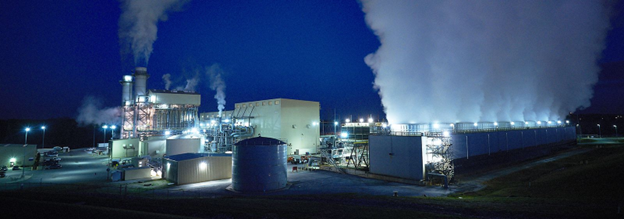
Duke Energy’s Buck Steam Station Located on the Yadkin River in Rowan County. Picture Credit: Duke Energy
Duke Energy is considering two combined-cycle methane power plant sites across the Yadkin River from each other in Davidson and Davie counties in addition to an expansion at the Buck Station in Rowan County. These plants would generate electricity with a gas-powered turbine which would produce heat and use the heat to convert water to steam, powering the second turbine.
Last week, the NC Utilities Commission held a packed public hearing considering the Buck Station expansion and about 20 community members presented comments regarding Duke Energy’s recent rate hikes and the connection between the need for increased power capacity to the rapid arrival of data centers in the state.
Duke has proposed two potential sites for these additional power plants: between Giles Road and the Yadkin River in Davidson County and on the Perkins Gamelands (U.S. 801) in Davie County. The energy company is considering the use of one or both of these locations for power generation. These sites are located directly on the Yadkin River, providing the water needed to convert water to steam and cool the machinery. Duke provides population growth and the demand for energy from future data centers as the rationale for new power plants in the state.
Duke Energy identified the Davidson County site because it is already located near transmission lines and Transco’s methane pipeline. The Davie County site is located on Duke Energy owned land, currently being leased to the Wildlife Resources Commission to be used as gamelands. The public will have opportunities to provide their input through the rezoning process of these properties at the county level, a NC Department of Environmental Quality public comment period for Duke Energy’s application for an air quality permit, and a NC Utilities Commission hearing for Duke Energy’s request for a Certificate of Public Convenience and Necessity.
In another part of our watershed, the Rural Hall community is fighting against a proposed data center that would be located on the intersection of Bethania-Rural Hall Road and Tobaccoville Road, across from the Town Hall. The developer, the Drox Group LLC has submitted a rezoning application to the county to rezone the 128-acre residential property to light industrial.
A series of meetings were held in Rural Hall last week: a meeting hosted by a consultant working with the developer to describe the project (without much detail), a Town Hall meeting hosted by the Rural Hall mayor at which the developer gave the same presentation and the community asked questions and voiced thoughtful reasons for denying the development, and a community meeting where folks could share their concerns and research regarding the data center.
The many concerns from community members include a constant humming noise, the strain on water resources, the impact on electric bills to meet the increased demand for electricity, public health effects, and the immediate proximity to residential areas. The property is located on Beaver Dam Creek, a tributary to Muddy Creek which meets the Yadkin River in Davidson County. The data center would connect to city water which is supplied from the Yadkin River and the county’s secondary drinking water source, Salem Lake.
Data centers are known to put stress on our water resources because of their high demand for water for cooling processes. The consultant representing the developer stated this data center would use a closed-loop system to decrease the loss of water to evaporation, but he did not provide the exact value of water usage, reinforcing the community’s concerns about the developer’s lack of transparency. The impacts of data centers on water quality are still being studied, but there are concerns regarding the quality of the discharge from these facilities. They may contain heavy metals and PFAS.
The Winston-Salem/Forsyth Planning Board will consider the Drox Group’s rezoning application at the May 14 meeting. The Planning Board will make their recommendation to the County Commissioners who have the final authority to approve or deny the rezoning request.
For questions about impacts of these proposed projects on the Yadkin River watershed, please contact nicole@yadkinriverkeeper.org.