By Nicole Eastman, Riverkeeper Assistant and Watershed Protection Specialist
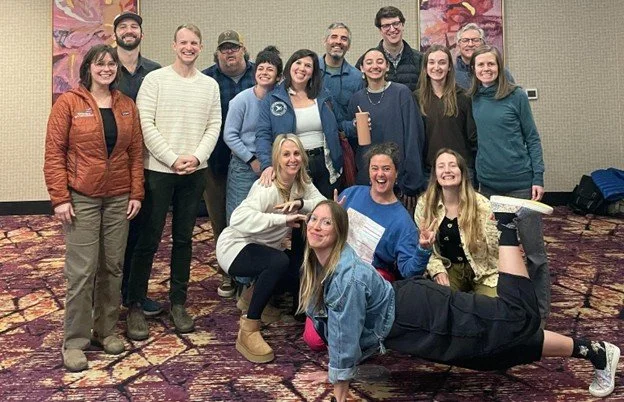
Some of the great folks who attended the Waterkeepers Carolina meeting hosted by Yadkin Riverkeeper in Winston-Salem.
Twenty-five staff members from nine North and South Carolina Waterkeeper organizations met in Winston-Salem on March 17–18 to discuss advocacy priorities, including data center impacts and hurricane preparedness. Waterkeepers Carolina (WKC) meets twice per year, and this spring, Yadkin Riverkeeper hosted the coalition in Winston-Salem.
The two day in-person meeting began with a presentation from Nicole, YRK’s Riverkeeper assistant, Riley Lewis, Coastal Carolina Riverwatch’s White Oak Waterkeeper, and Grant Buckner, Catawba Riverkeeper’s Northern Basin Coordinator. These three organizations are developing or have developed watershed restoration plans, and they shared restoration planning techniques, project ideas, relationship-building strategies, and lessons learned from their projects.
With communities across the state speaking out against data centers and municipalities passing moratoriums on these developments, Waterkeepers Carolina dedicated time to discussing water quality issues associated with data centers and potential strategies for groups to support local communities in their efforts to gain more transparency and oppose harmful projects.
After Hurricane Helene, members of WKC traveled to Asheville to provide support to the French Broad and Green Riverkeepers by distributing well testing supplies, collecting soil and sediment samples, and processing well samples. WKC provides a network of support to Waterkeepers that may experience an emergency like a hurricane. During this meeting, the group discussed ways they can be proactive to prepare for future disasters and lessons learned from previous events.
On the second day, WKC took a deep dive into a collective advocacy agenda to identify common priorities across organizations which included topics such as emerging contaminants, harmful algal blooms, septic tank failures, and data centers. Although each watershed faces a different series of threats, WKC provides the space for advocates to brainstorm, share ideas and successes, and develop collective strategies to better protect North Carolina and South Carolina’s watersheds.