By Nicole Eastman, Yadkin Riverkeeper and Ward Swann, Yadkin River State Trail Coordinator
Ward Swann, Yadkin River State Trail Coordinator
The trip from Yadkin to Shoals is usually considered a long day. This stretch is one of the longer sections of the river without public access. We pass through the communities of Rockford and Siloam where someday there may be river accesses at each, but the right combination solutions have yet to come together. Most of the time I allot 8 hours for the trip. We did it in 6. Partly cloudy sky's covered partly misty valleys as we cruised downriver. Still high waters floated us over rocks that normally are 2 feet out of the river. Stopping to clear the undergrowth in front of Yadkin River State Trail Mile Markers 114 and 108, I'm sure that I will have a case of poison Ivy soon. (edit, I do).

The biggest surprise of the day was the aftermath of the flooding of the Ararat out of Mount Airy. This occurred on the night between our first and second day on the water. The flood waters from Mt Airy had carried silt and rock to the confluence of the Yadkin and created a 200 foot sand bar. On the opposite side of the river a shear bank had been created where the force of water sawed into the Yadkin County side.
By afternoon the humidity gave way to the persistent drying powers of the sun. Reaching camp at Easy Bend Farm allowed us to spread out and dry off from the rainstorm from the night before. The camp at Easy Bend is the first time that we have been in a really quiet setting. Each of the other nights have been near a road. Distant lawnmowers are the only engine I hear.

Our hosts tonight will be some long time friends of Yadkin Riverkeeper, Christine Rucker and Ken Putnam. Their place, Easy Bend Farm, is by the river and is part of the ever growing Agritourism industry along the river.
Agritourism is an increasing way for the land and resources to provide added income for a family while the farmer is able to better steward the land. In some cases it allows the farm to stay in the hands of a local farming family instead of being consumed by an industrial ag giant, or subdivided into housing lots. In other cases it allows an entrance into agricultural living that is more accessible to new farmers. In either case, the communities and the land by and large benefit from the rise of agritourism. Family farms work the land with the understanding of the past and an eye on what is good for their farm in the future. Some farms go the extra step to place the land in a conservation easement to protect it from development well into the future. Produce from nearby farms supplement the ever increasing farm to table establishments. Vineyards will purchase fruits for special runs of wine from neighboring farms. Agritourism is one way to keep the food source local, family farms viable, and help visitors who want to understand the passion of farming find places to do so.
The Yadkin River flows through a lot of family farm territory. Easy Bend Farms has taught me a lot about Blackberries. They have a revolving cast of species that come ripe all summer long. We will be staying on the portion of their property that is by the river where individuals can camp or events can be based out of. The Shelter for the camp is very impressive in its construction and I can attest as to how well it kept a large group bone dry during a summer thunderstorm once. And they have an Airbnb that is perched to look down on the Yadkin River and the land to the north. We’ve already stayed at one Agritourism spot on this trip, Upper Yadkin Outfitters. We passed another longtime supporter of Yadkin Riverkeeper, Carolina Heritage Vineyards yesterday. Vineyards and their wine tasting rooms have led the way of Agritourism. Another vineyard within a few miles from Easy Bend (Devine Llama Vineyards) also has Llama treks. These whimsical animals are as curious about you as you are them. The day after tomorrow we will pass the shores of the Shallow Ford Daylily Farm and Event Center.They can ship daylilies around the world and host events large and small. Yadkin Riverkeeper uses their event barn for fundraising events where we want to make the best of impressions. That’s just a sample of what Agritourism opportunities await within the basin. Each one that I have mentioned is so interesting that they deserve their own article.
By taking advantage of these opportunities a visitor helps provide a lifeline of income not just to the farms visited, but to the communities through which they travel: stopping for gas, grabbing a bite, going out for ice cream or a brew, staying at some airbnb cabins, stopping at a roadside stand. The exchange is fair. The traveler is getting the product or service, usually at a great price, and that enables someone in that community to live a little easier.
Christine and Ken have been and are incredible supporters of the Yadkin Riverkeeper, but this time I am happy to pay for the beautiful site by the water that we occupy.
Seriously, you gotta see this picnic shelter….
Additional Reading for Agritourism:
Agritourism for Small Farms in North Carolina | NC State Extension Publications
Nicole Eastman, Yadkin Riverkeeper
I woke up after a noisy night under the 601 bridge feeling a little more tired and damp from the rain. Once we were floating away from Yadkin Shores towards Pilot Mountain State Park I felt much better. Now, all we had to worry about was paddling about 16 miles today with a steady current behind us.
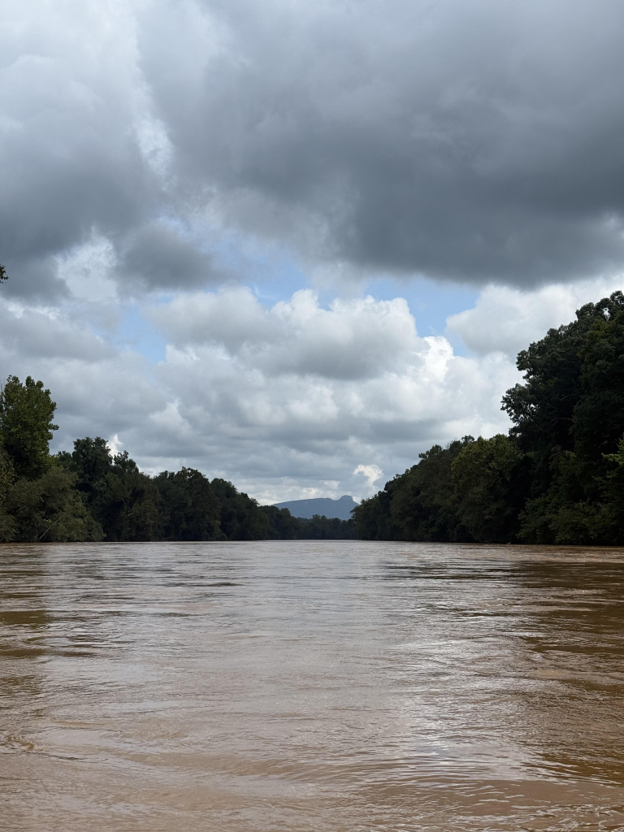
I love how the river continues to widen on our way to Shoals as we passed a few communities, Rockford and Siloam. Usually, we can stop underneath one of the bridges for a lunch break, but with the river levels up, it was hard to find a dry place to land. We eventually found a boat ramp to take a quick break amidst all of the farmland that lines the Yadkin River bank in Yadkin County. While floating this stretch of the Yadkin, we came across cows helping themselves to the cool river water. Unfortunately, cows in the Yadkin River and its tributaries cause a list of problems for water quality. They trample vegetation and contribute to erosion and sedimentation of the river and cause bacteria and nutrient pollution every time they go to the bathroom on the banks or in the water. Local Soil and Water Conservation Districts help farmers pay for fence installation and well drilling to provide their cattle with drinking water.

While we were still up in Happy Valley, we heard about the terrible flooding that impacted Mt. Airy and the Ararat River. We saw those impacts as we passed the confluence of the Ararat with the Yadkin. A large sandbar formed a rocky and sandy island in the middle of the Yadkin River. You could see the force and power of the flooded Ararat along the banks on the right side of the river where the Ararat sheared away the vegetation and part of the Yadkin River’s bank. I stopped to collect water quality data with Mindy and Steve at the sandbar and wondered whether it will become a vegetated island in the next few years. It was an interesting spot because I could monitor on the left side of the newly-formed island to capture the water quality of the Ararat and on the right side to compare the water quality in the Yadkin River.


After a few more miles, we made it in good time to Easy Bend Farms where we rented a Hipcamp for the night. Ken and Christine were amazing hosts, letting us sun our tents and spread our gear out to try and dry everything out. They shared stories about their special property on the river and their connection to the Yadkin. They had one of my favorite views of the river from their tall riverbank. The sun’s reflection turned the brown river blue and shiny as you looked downstream, and the river was framed by blue sky and green forest.

Right before we headed to our tents for the night, we got hit with a surprise downpour. Another wet night, but thankfully they had a beautiful pavilion made from trees cut on their property for some folks to take cover and wait out the storm.
