By Nicole Eastman, Yadkin Riverkeeper
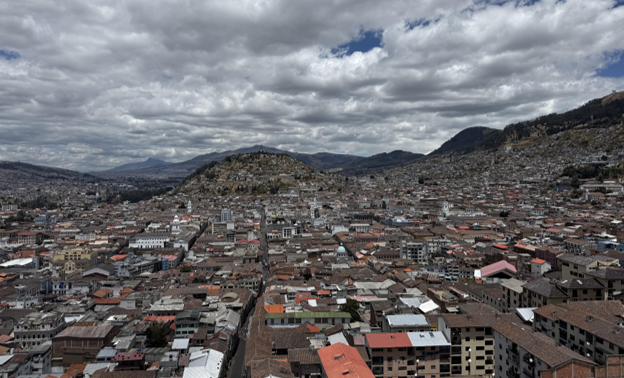
A picture of Quito, Ecuador from the historic center.
I was among many other Waterkeepers from across the world in Quito, Ecuador this past week to share ideas, connect with fellow water advocates, and think through collective goals. It’s always exciting to see a room full of Waterkeepers excited to share stories of their successes, lessons learned, and about their favorite swimming holes and paddling trips.
The Guayllamba Riverkeeper, Patricio Chambers and his family coordinated the conference with support from Waterkeeper Alliance to include informative sessions led by our peers and local Ecuadorian water advocates, field trips to experience Ecuadorian culture and history, and regional and membership meetings to discuss our biggest areas of concern right now
The first day of the conference was full of interesting presentations and workshops. I started in a session presented by fellow NC Waterkeeper, Emily Sutton (Haw Riverkeeper) and Maribel Pasquel, Coordinator of the San Pedro River Rescue Collective in Ecuador. Their goal was to encourage Riverkeepers to use storytelling to be an effective advocate and to build a community of advocates for their river. I thought about how we can continue to use storytelling and support community members drawing from their own experiences to fight the proposed Duke power plants on the Yadkin River.
The next session I attended spoke about the Rights of Nature movement in Ecuador. It is a legal movement that gives ecosystems and natural entities legal personhood and the rights to carry out their natural cycles and flourish. Two water advocates from Ecuador shared how the country adopted the Rights of Nature in its new constitution. It is inspiring to see a country recognize ecosystems as living entities with inherent rights, but I also learned about the gap between the legal wins and the actual restoration of degraded rivers. They shared examples of the Rights of Nature being applied to legal cases to protect rivers; however, there are many challenges that prevent timely environmental restoration.
In the afternoon, I learned from the folks at Blue Water Baltimore about their Pollution 101 Training to enlist community members’ help to identify and report sewage contamination. Then, I listened to former Yadkin Riverkeeper, Dean Naujoks’ talk about communicating to community members, especially farmers, the risks associated with biosolid application and the resulting PFAS contamination on farmlands in the Potomac River watershed.
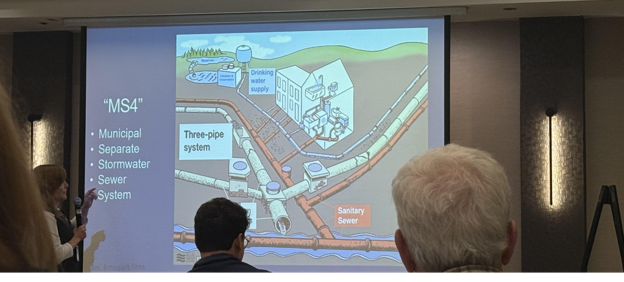
Blue Water Baltimore shares a graphic representing a city’s MS4 stormwater system.
The next couple days consisted of a mix of field trips to the local San Pedro River and other important sites in Quito and meeting time to allow Waterkeepers to talk candidly about their priorities and learning topics for future summits to support our efforts. A couple issues that came up frequently included the proliferation of data centers and how to fight and monitor them. We also briefly talked about the associated energy buildout required to support these energy and water-intensive facilities, a particular issue in our watershed.
After the recent natural disasters in Nepal, many Waterkeepers expressed their interest in centering more of our discussions on climate resilience and preparedness. I find it easy to focus on the obvious threats to our watershed daily that are hard to ignore: the proposed power plants on the Yadkin, the black mat algae smothering Tuckertown Reservoir’s coves, the sediment pollution turning the river very turbid after each rain, and the sewer spills impacting the creeks in Winston-Salem. However, the impacts of climate change have made a mark on our watershed too from the previous floods to the current drought, the Yadkin River watershed is not immune from these severe, unusual weather events.
We had plenty of time to share stories about our rivers, and now I have a new list of rivers that Waterkeepers have inspired me to visit. I left hopeful after seeing how many water protectors we have across the world dedicated to improving the water bodies we love for future generations.